
Indian benchmark stock indices, Sensex and Nifty, extended their winning streak for a third consecutive day, driven by positive global market trends and a significant softening of crude oil prices following a peace deal between the US and Iran.

The National Stock Exchange (NSE) is set to launch India's largest initial public offering (IPO), estimated at Rs 30,000 crore. This mega public issue will surpass previous records held by Hyundai Motor India and Life Insurance Corporation of India (LIC), marking a significant event in the Indian stock market. The move comes as India's primary market shows signs of recovery after a period of slowdown.

India is adopting a two-pronged strategy for artificial intelligence development, focusing on open-source models and indigenous innovation to counter global access restrictions on advanced AI technologies. The government aims to support local developers and ensure AI creates tangible economic impact across various sectors, rather than being solely driven by market speculation.

Indian stock markets are expected to remain highly sensitive to geopolitical developments, particularly the US-Iran situation, and crude oil prices this week, with analysts also highlighting the influence of the rupee-dollar trend, foreign investor activity, and upcoming inflation data.

Benchmark equity indices Sensex and Nifty tumbled in early trade on Wednesday, tracking a bearish trend in Asian markets, as the conflict in West Asia widened, driving oil prices higher.

From the 30-Sensex firms, InterGlobe Aviation, Sun Pharma, Asian Paints, Reliance Industries, Hindustan Unilever, and Tata Steel were among the biggest laggards. However, Trent, UltraTech Cement, Maruti, and Power Grid were among the gainers.

India's market regulator, Sebi, has approved the re-introduction of open-market share buybacks through stock exchanges, effective August 1, 2026, alongside easing debt listing norms for RBI-regulated entities and simplifying rules for mutual funds and alternative investment funds.

Indian stock markets, including the Sensex and Nifty, rebounded significantly, driven by a decline in crude oil prices and positive global cues stemming from hopes of diplomatic progress in US-Iran negotiations.

From the Sensex firms, Tech Mahindra, Tata Consultancy Service, Infosys, HCL Tech, Tata Motors, Trent, Reliance Industries and Larsen & Toubro were among the major laggards. However, Eternal, Bajaj Finance, Adani Ports and UltraTech Cement were among the gainers.

Indian stock markets rallied in early trade after US President Donald Trump announced a halt to planned military strikes on Iran, citing requests from Gulf leaders and ongoing "very big discussions" that could lead to a deal. This de-escalation, coupled with foreign fund inflows and gains in IT and Adani group stocks, contributed to the positive market sentiment. Track Sensex and Nifty on May 19, 2026.

'Once the market decides it wants to go up, it goes up -- no amount of bad news can really hold it back.'

The remarkable rise of smallcaps reflects the emergence of a broad set of specialised businesses operating in industries where the sectoral tailwinds remain considerably stronger than macroeconomic headwinds, points out Debashis Basu.

Indian benchmark indices, Sensex and Nifty, extended their winning streak for a fourth consecutive session, driven by a significant drop in crude oil prices following a peace deal between the US and Iran. This development has fuelled investor confidence and buying activity across the market.

In April alone, they snapped up shares worth Rs 19,664 crore, recording their biggest buy since October 2024.

Investors are keenly awaiting clarity on Reliance Jio Infocomm's IPO, the company's AI and data centre strategies, and next-generation leadership structure at Reliance Industries Ltd's (RIL's) 49th annual general meeting (AGM).

A former life insurance manager in Thane has been sentenced to two years in jail for defrauding people of over Rs 3.51 crore with false promises of high returns on stock market investments.

From the Sensex firms, Adani Ports, NTPC, Power Grid, HCL Tech, Tata Steel, Sun Pharma, Trent and Asian Paints were among the major gainers. However, Bharat Electronics, Eternal, Mahindra & Mahindra and Maruti were among the laggards.

Aviation stocks experienced a significant surge following the announcement of a two-week ceasefire between the US and Iran, which led to a sharp decline in crude oil prices. This development has positively impacted stock markets and the broader economic outlook for India.
From the 30-Sensex firms, Tata Steel, Kotak Mahindra Bank, Reliance Industries, Axis Bank, Titan and Trent were among the biggest gainers. However, Tata Consultancy Services, Tech Mahindra, Infosys, Bajaj Finance and Sun Pharma, were the laggards.
Trading activity of foreign investors and crude oil prices would also remain in the limelight during the week, experts noted. "This week brings a series of important economic data releases from India and the United States, which are likely to influence market sentiment and central bank outlooks.

Among Sensex firms, Maruti, Axis Bank, Larsen & Toubro, ICICI Bank, Bharti Airtel, Infosys, Adani Ports and Hindustan Unilever were the laggards. However, Titan, State Bank of India, Eternal and Trent were among the major gainers.
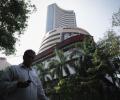
Stock markets will remain open for trading on February 1, Saturday, when Finance Minister Nirmala Sitharaman presents the Union Budget, bourses BSE and NSE said on Monday. Stock markets are generally closed on Saturdays and Sundays, except for special circumstances.
Indian stock markets experienced a second consecutive day of losses, with the Sensex tumbling 852 points, as crude oil prices surpassed USD 100 per barrel due to stalled US-Iran negotiations and escalating geopolitical tensions in West Asia.
Indian benchmark equity indices Sensex and Nifty closed higher, recovering from previous losses, driven by a global market rebound, a pause in Israel-Iran hostilities, and a rally in bank stocks.
Indian stock market benchmarks Sensex and Nifty closed higher on Tuesday, buoyed by a drop in crude oil prices, a rally in global markets, and strong buying in IT stocks.

Indian benchmark indices Sensex and Nifty experienced a significant slump, with the Sensex tumbling 719.08 points, driven by escalating West Asian tensions, a sharp rise in crude oil prices, and a global sell-off in technology stocks.
Indian benchmark indices Sensex and Nifty closed higher, with the Sensex climbing 355.90 points, driven by positive state election results and better-than-expected Q4 earnings, despite ongoing geopolitical concerns.
The government on Tuesday ruled out any surreptitious entry of terrorist outfits into the stock market and said that sufficient caution has been administered to the stock exchanges to look out for any suspicious entry into their activity.

Indian benchmark equity indices, Sensex and Nifty, ended lower after a five-day rally, with the Sensex dropping 607 points and the Nifty falling to 24,013.10. The decline was primarily driven by heavy selling in IT firms following Accenture's trimmed revenue guidance and renewed geopolitical uncertainty, specifically the postponement of US-Iran negotiations.

Indian stock markets are set to be influenced by ongoing developments in the US-Iran conflict, fluctuations in crude oil prices, and the latest quarterly earnings reports from major corporates, with foreign investor activity also playing a crucial role.
Indian benchmark indices Sensex and Nifty rebounded sharply on Monday, driven by a correction in crude oil prices due to ceasefire efforts in West Asia and strong buying in bank stocks.
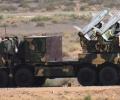
Indian defence stocks have seen an average year-on-year gain of 67 per cent, driven by renewed interest following 'Operation Sindoor' and a broader increase in global geopolitical tensions, with the combined market capitalisation of 18 firms increasing by approximately 2.3 trillion.

Indian benchmark stock indices, Sensex and Nifty, recorded their fourth consecutive day of declines, driven by selling in FMCG, financial, and auto sectors. The downturn is attributed to fresh tensions in the Middle East, uncertainty surrounding the US-Iran 60-day ceasefire, and elevated crude oil prices.

A 36-year-old man from Thane, Maharashtra, was allegedly defrauded of Rs 62 lakh (62,000) by an acquaintance who enticed him to invest in the stock market with promises of high returns.

Indian benchmark stock indices, Sensex and Nifty, closed nearly 1 per cent lower following the collapse of US-Iran negotiations, which heightened concerns of a prolonged conflict in West Asia and drove crude oil prices sharply higher.
Indian benchmark indices, the BSE Sensex and NSE Nifty, snapped a four-day losing streak, with the Sensex climbing 382 points, primarily driven by a strong rally in IT sector shares. Major IT firms like TCS, Infosys, and HCL Tech saw significant gains, contributing to the market's recovery.
Among Sensex firms, Eternal, Infosys, Asian Paints, HDFC Bank, Bajaj Finserv and Titan were the major gainers. However, Tata Steel, Tech Mahindra, Adani Ports and Bharat Electronics were among the laggards.

Sensex plunges over 1,400 points and Nifty slips near 22,250 amid Trump's Iran threat, rising crude oil prices, and FII selling. Here are the key reasons behind today's market crash.
Indian investors have seen their wealth erode by a staggering Rs 16.77 lakh crore over four trading sessions, as the markets faced deep losses driven by elevated crude oil prices, geopolitical tensions, persistent foreign fund outflows, and a record-low rupee.

The Indian stock market is poised for a volatile week, influenced by the Reserve Bank of India's monetary policy decision, crucial global macroeconomic data, and the escalating geopolitical tensions in West Asia, according to market analysts.
